
See who is working their list看谁在处理自己的清单
Who is clearing the follow-ups they were given, what those calls actually produced, and how much is being put off rather than done.谁把交办的跟进做完了,那些电话实际谈出了什么结果,以及有多少只是被往后推而不是真的处理掉。
这篇指南的正文目前只有英文版。标题、摘要与导览已翻译;内文仍在翻译中。
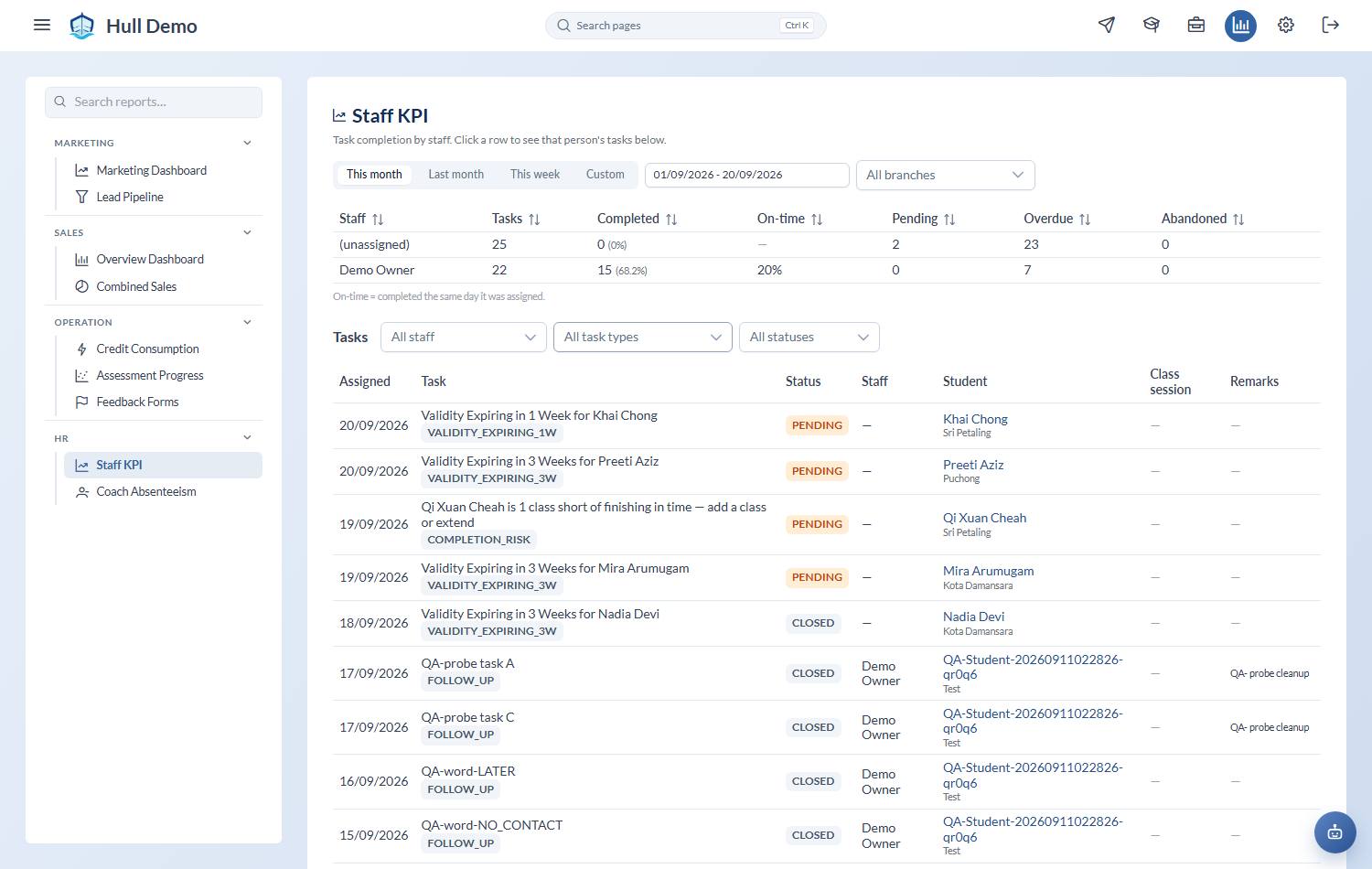
Every day Hull hands the front desk a list: renewals due, trials to chase, children falling behind. Reports → Staff KPI shows what happened to it.
Head coaches and the owner only.
Four ways to read the same day
The reports read one column — the outcome a person chose when they closed the task — which is what makes them add up at all. Four views of it:
| View | Answers |
|---|---|
| By day | What is waiting, claimed, closed and missed right now |
| By person | Who was given what, and what they produced |
| By type | Which kinds of call work, and which do not |
| By reason | When something is over, why |
By person is the one most owners open first: tasks given, closed, and the split between won, later, lost and no answer.
Execution and "put off" are two numbers
Closing a task is not the same as finishing it. Choosing *come back to it* closes today's task and raises tomorrow's, so a page counting only "closed ÷ given" cannot tell dealt with from deferred.
So every view prints put off beside execution. A person at 90% execution where half of it is put off is not working their list; they are moving it. Read the two together or the page will flatter somebody.
The task table
Every individual task, filterable by staff, branch, type and date. This is where you go when a number above looks wrong and you want to see what is behind it.
The one number to read first
Missed. A task the day closed because nobody got to it is not the same as one somebody tried and could not finish. It means a family expected a call and has not had it.
Late is a workload problem. Missed is a process problem.
Missed tasks are not written off: the daily list shows the last week of them on its own red card, and a head can put one back on today's list. That is the loop — the system closes what nobody reached, the head decides what still has to happen.
Lost is not one number any more
Reading a person's Lost count used to mean less than it looked like, because the same word covered a family leaving, a trial declining, and a certificate that never got handed over. Those are now three different outcomes underneath, and only one of them is a departure.
So a high Lost count is a question, not a verdict: look at which kind of task it sits on before drawing anything from it. See Work the daily list.
What this is not
It is not a score. Hull shows the counts and stops. There is no grade, no ranking, no target it measures people against — because the right number of tasks depends on the branch, the month and who was on leave, and a system that does not know that has no business grading anyone.
Read it with what you already know about the person, or it will mislead you.
What it does not show yet
Sign-ups, trial conversion, renewal rates and churn are not on this page. They were in the first design and were taken out: the page does one job now — who worked their list — and the business results live where they always did, on the Overview Dashboard and the marketing dashboard.
Who a task belongs to
The daily list records an owner for every task: whoever claims it, or whoever ticks it first. A head or the owner can assign work to a named person; a branch admin can claim and release but cannot hand a job to a colleague — that is the head's call to make and to see.
This page counts by that owner, so the numbers only mean something if the claiming habit is real. A branch where everything is unclaimed produces a page of blanks, not a page of zeroes.
Related: Work today's follow-up list · Read the Overview Dashboard · Evaluate a coach.