
Build your curriculum建立你的课程体系
Levels, the skills inside them, and the certificates at the end — the ladder every student climbs.等级、等级里的技能,以及结业证书——每个学生都要爬的那道梯子。
这篇指南的正文目前只有英文版。标题、摘要与导览已翻译;内文仍在翻译中。
Your curriculum is data, not code. You author the ladder — swim strokes, music grades, belts, dance stages, tuition modules — and everything else in the system reads it.
Where it lives
Settings — the cog in the top bar — under Curriculum & Progress:
- Levels — the rungs of the ladder, in order.
- Skills — the competencies inside each level.
- Certs — the certificates you issue.
- Class Types — which levels each kind of class accepts.
- Student Types — your segments, and which of them are tracked on the ladder.
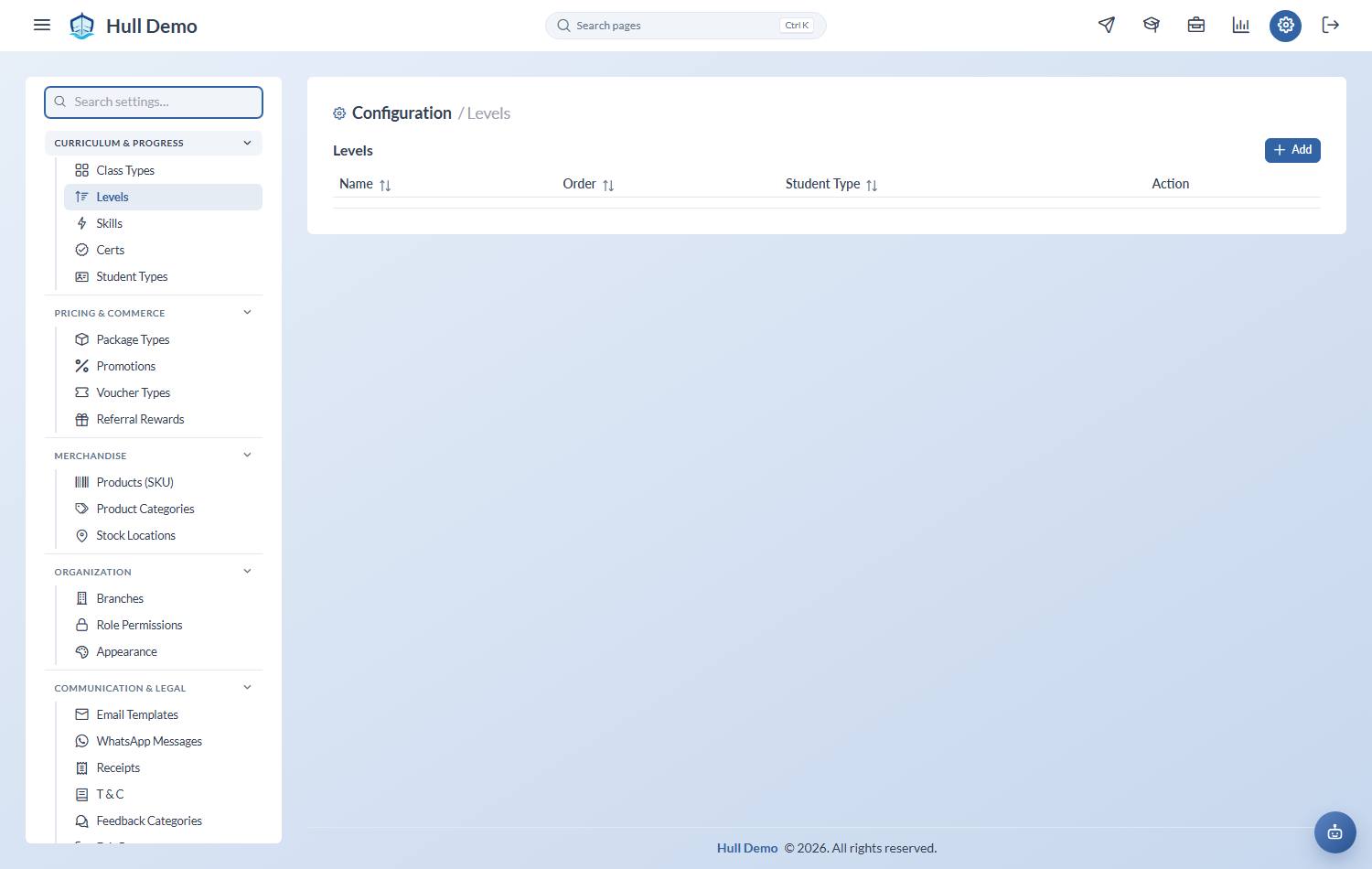
1. Define your levels
Add each level in the order a student climbs it — the lowest first. Order matters: it decides what "the next level" means when a student passes.
Levels are scoped to a student type, so an adult ladder and a children's ladder can be entirely different and neither pollutes the other's dropdowns.
2. Break each level into skills
Skills are what a coach ticks off week to week. They are the difference between "not ready yet" and "needs these two things".
Aim for skills a coach can judge in a single class. A skill nobody can confidently tick is a skill that will never be ticked.
3. Add your certificates
Whatever the child physically receives at the end of a level.
How it all connects
- A class type allows certain levels, so a child cannot be booked into a class far above or below them.
- A package type can be scoped to a student type, so you sell the right products to the right segment.
- Assessments test a level; passing qualifies the student for the next one.
- The stagnation report measures the gap since the last pass — which only works if the ladder has enough rungs to make passing a regular event.
Related: Set up your class types · Set up your student types · Schedule an assessment.